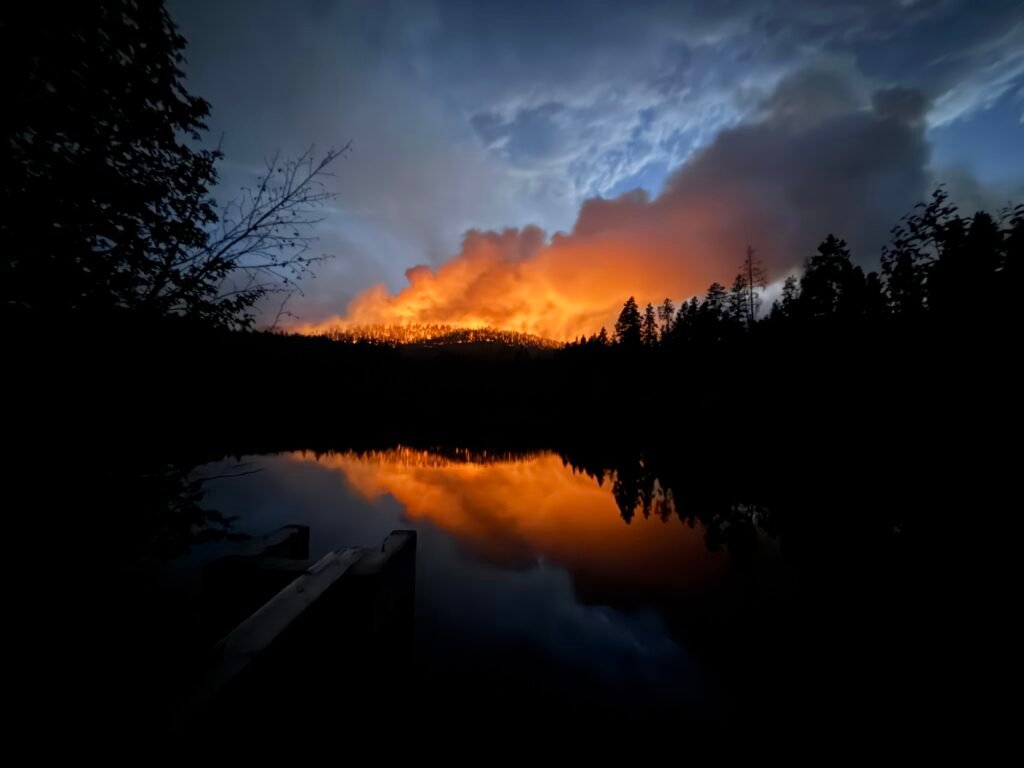
The Willow Fire burns near Leadville National Fish Hatchery (USFWS/Josh Homer)
Burning pine needles were drifting down over the Leadville National Fish Hatchery on June 29 when Josh Homer made a hard call: get the fish out now.
The Willow Fire had started the afternoon before, roughly two miles northwest of the hatchery. A firefighter had just told Homer his crew was getting nervous about conditions. Inside the tanks were some of the most valuable fish in Colorado, including the greenback cutthroat trout, our state fish.
What happened over the next three days is a story about teamwork and quick thinking. It is also a reminder of how fragile the greenback’s future still is.
A state fish that still needs our help
The greenback cutthroat is a fish still struggling to survive in the wild, which is why hatcheries matter so much to its recovery. Leadville keeps a broodstock of greenbacks: adult fish held to produce eggs and the next generation. Colorado Parks and Wildlife (CPW) relies on only two such broodstocks for its recovery work, and Leadville is one of them. That is a thin safety net. Homer put it plainly during the evacuation: losing that stock would have been a serious blow to the species’ future survival.
The hatchery also holds Hayden Creek cutthroat trout, another rare native fish. Their story shows how recovery works. The population traces back to fish rescued when wildfire swept through their drainage in 2016. Survivors eventually moved to Leadville, where staff raised them and returned fish to waters in the Arkansas River basin. In 2026, they faced fire a second time.
Three days, more than 148,000 fish
When the window to move the fish looked uncertain, federal hatchery staff and CPW crews started by hand. One person netted fish from a tank, passed the net down a line of people, and a truck crew slid the fish into a transport tank. CPW’s Bryan Johnson summed up the goal this way: “My big goal was just to get them on trucks.”
Over three days, the crews moved more than 148,000 fish. About 5,000 were greenbacks and about 1,500 were Hayden Creek brood fish. Roughly 142,000 were rainbow trout, which were stocked into available waters earlier than planned rather than risk losing them.
The work was careful as well as fast. Different age classes of greenbacks and Hayden Creek cutthroat had to stay separate to protect genetics that staff had spent years preserving, so each group went into its own tank and each movement was labeled. The brood fish landed at four CPW hatcheries: Mount Shavano in Salida, Roaring Judy in Almont, the Mumma Native Aquatic Species Restoration Facility in Alamosa, and Durango. Greenbacks no longer needed as broodstock went to Joe Wright Reservoir near Cameron Pass, where anglers can fish for them.
None of this was improvised from scratch. Johnson has worked with the greenbacks since 2008, when he was there the day they were brought to the hatchery from Bear Creek. That long partnership between federal and state teams is what let a plan come together in hours.
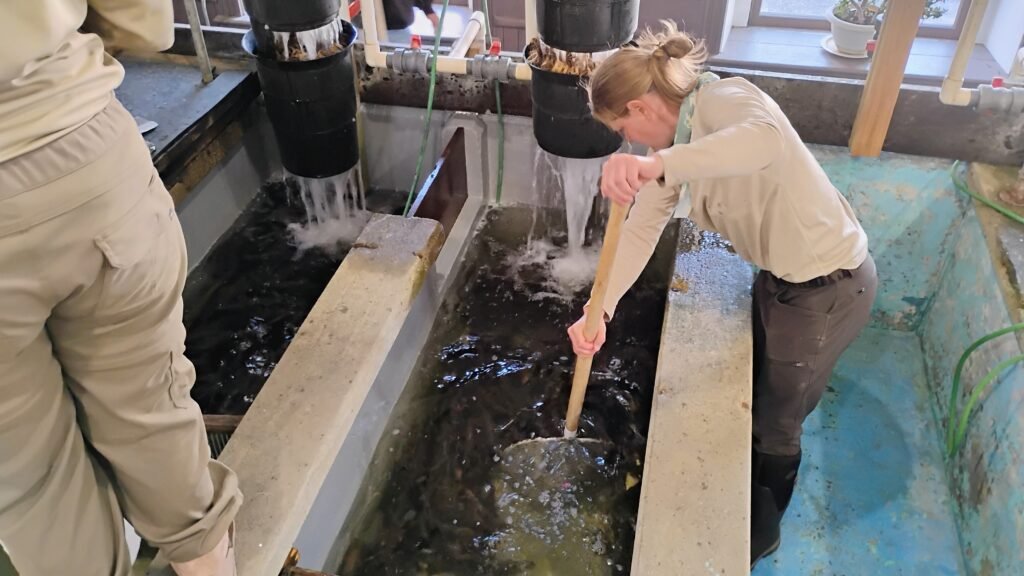
Photo: USFWS staff begin evacuation of hatchery trout at Leadville National Fish Hatchery (USFWS)
Recognition for the people behind the fish
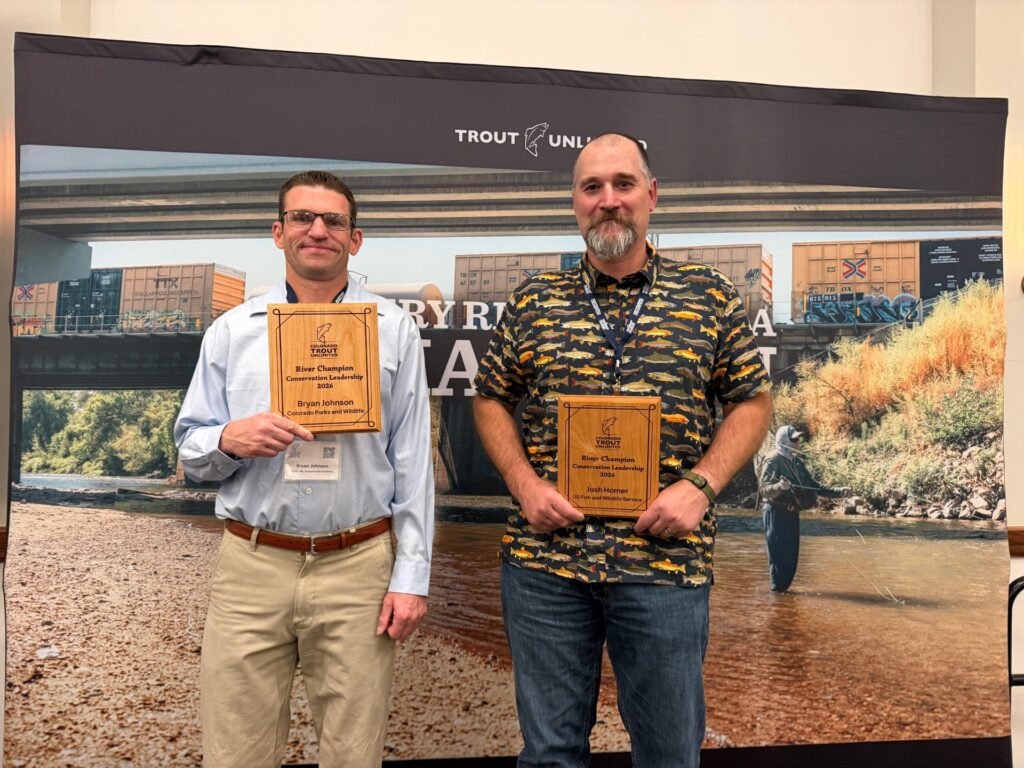
Photo: Josh Homer (right) and Bryan Johnson (left) accept the River Champion Conservation Leadership Award for their swift action to save greenback cutthroat trout threatened by the Willow Fire in summer 2026 (Courtesy of Colorado Trout Unlimited)
The effort did not go unnoticed. Colorado Trout Unlimited gave Homer, who leads the U.S. Fish and Wildlife Service’s Leadville and Hotchkiss National Fish Hatchery Complex, its River Champion Conservation Leadership Award. He and Johnson accepted it together. Executive Director David Nickum praised Homer’s “grace under fire – literally.
The hatchery itself came through. Firefighters protected the infrastructure of a facility that has operated since 1889 at about 10,000 feet, and it remained standing. Staff were still caring for a group of Hayden Creek cutthroat on site in July, with a truck ready to move them if conditions changed. The hope is to return the rescued fish to Leadville once the fire threat has passed.
What the Willow Fire teaches us
The rescue worked, but it also exposed a risk. A single wildfire put one of only two greenback broodstocks CPW depends on in danger within days. Recovery of a species that is still struggling in the wild cannot rest on one facility, one drainage or one lucky break.
Three lessons stand out:
-
- Redundancy is protection. Spreading broodstock across several hatcheries kept the genetics safe, and CPW had already been planning for drought, low water and wildfire emergencies.
-
- Partnerships are built before the crisis. Years of trust between federal and state hatchery teams are what made a three-day evacuation possible.
-
- Native fish need the whole landscape. Hatcheries can hold a species steady, but wildfire, drought and warming waters keep testing the places it lives.
There are simple ways to help. Support groups like Colorado Trout Unlimited that work on habitat and river health. Follow fire restrictions and practice fire safety whenever you are in the backcountry. And if you fish Colorado waters, learn to tell native cutthroat from stocked trout and handle every fish with care.
The greenback is still here because people showed up when it mattered. Keeping it here will take that same commitment, long after the smoke clears.
Sources: the U.S. Fish and Wildlife Service Mountain-Prairie Region story “Grace Under Fire: Leadville National Fish Hatchery Manager Receives Conservation Leadership Award,” and the USFWS and Colorado Parks and Wildlife feature “As Willow Fire approached, a call for help launched a race to save Colorado’s native fish” (July 16, 2026).